IronCove Pest Protection delivers comprehensive pest control service in Greenville to stop wood-destroying insects, destructive rodents, and seasonal invaders before structural integrity is compromised. Property owners across the Upstate encounter intense biological pressure driven by regional river systems, humid summer heat, and dense tree canopies.
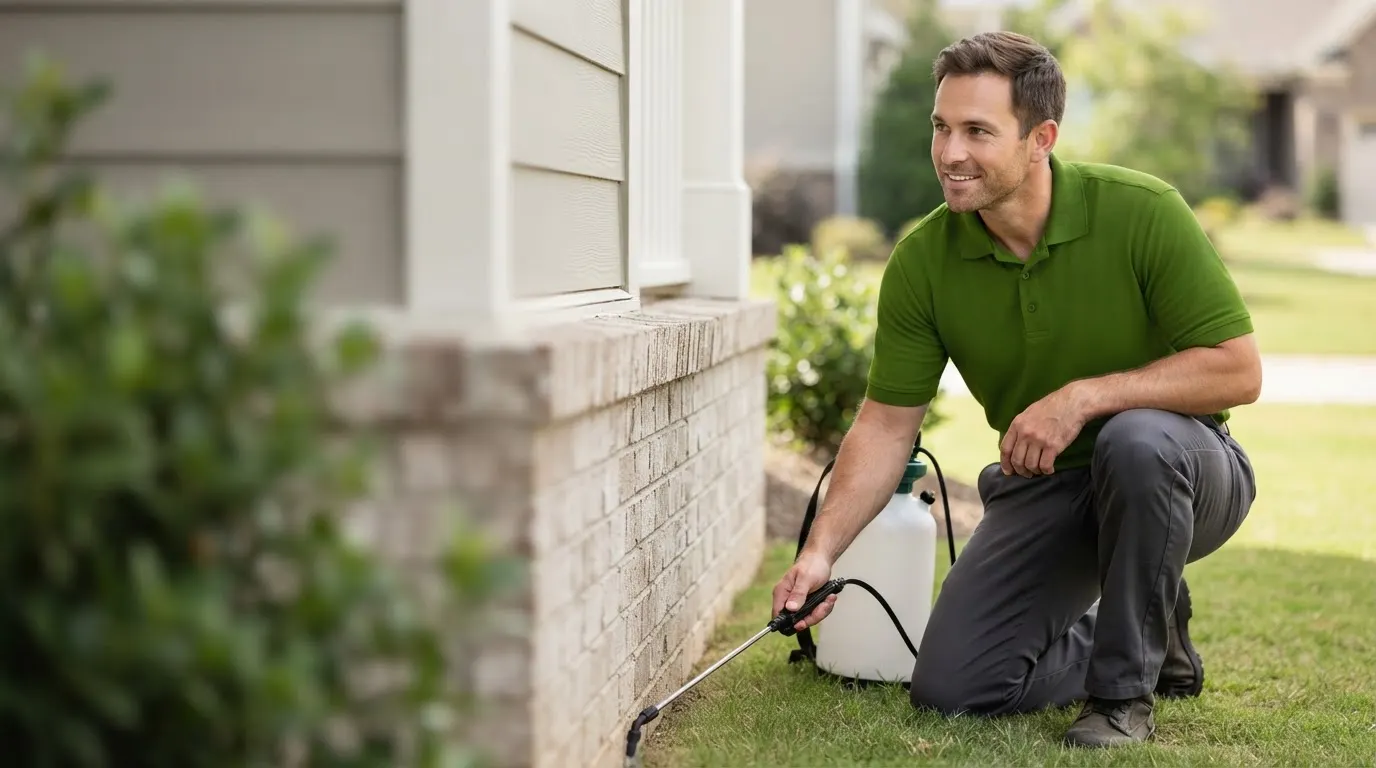
Pest Control Service company in Greenville is an architectural defense and biological eradication service that eliminates active infestations and seals residential structures against pest entry.
Every service reflects the same meticulous attention to detail, whether it's a single job or a larger pest control service project across Greenville.
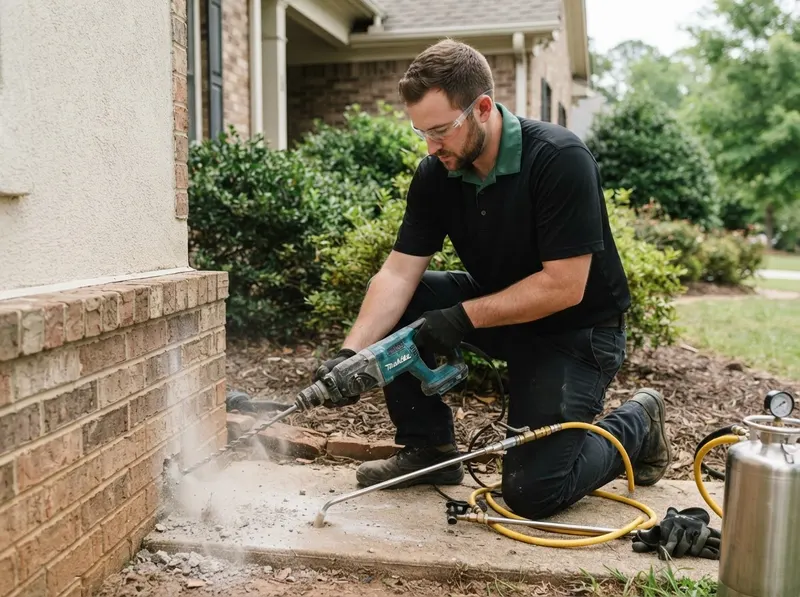
Subterranean termites cause significant wood destruction across the Upstate by building exploratory mud shelter tubes upward from moist red clay into structural sill plates, subflooring, and wall studs. Treatment protocol establishes an uninterrupted continuous barrier along the entire foundation perimeter using non-repellent liquid termiticides compliant with Clemson University Department of Pesticide Regulation standards. The barrier bonds with native clay soil particles, allowing foraging termites to unknowingly pass through the undetectable agent and transfer it back to subterranean queens via social grooming, causing total colony collapse within 60 to 90 days.
Get a quote →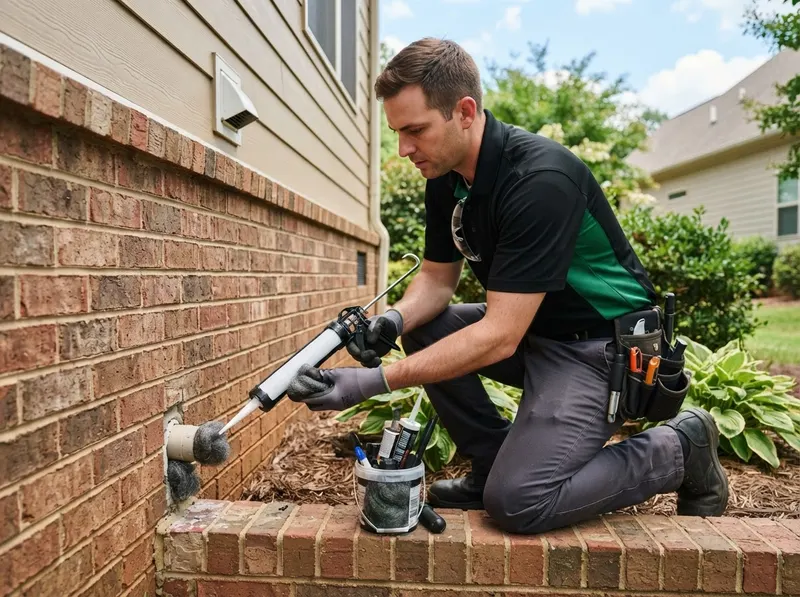
Norway rats, roof rats, and field mice exploit foundation vents, soffit transitions, and utility pipe penetrations to infiltrate crawlspaces and attics. Rodents chew electrical wiring, shred fiberglass insulation, and introduce pathogenic droppings that compromise indoor air quality. Rather than relying on temporary poison bait stations that leave carcasses within wall voids, mechanical exclusion uses 19-gauge galvanized steel mesh, copper mesh, and steel-reinforced architectural sealants to seal every breach point exceeding one-quarter inch, adhering strictly to CDC structural rodent control criteria .
Get a quote →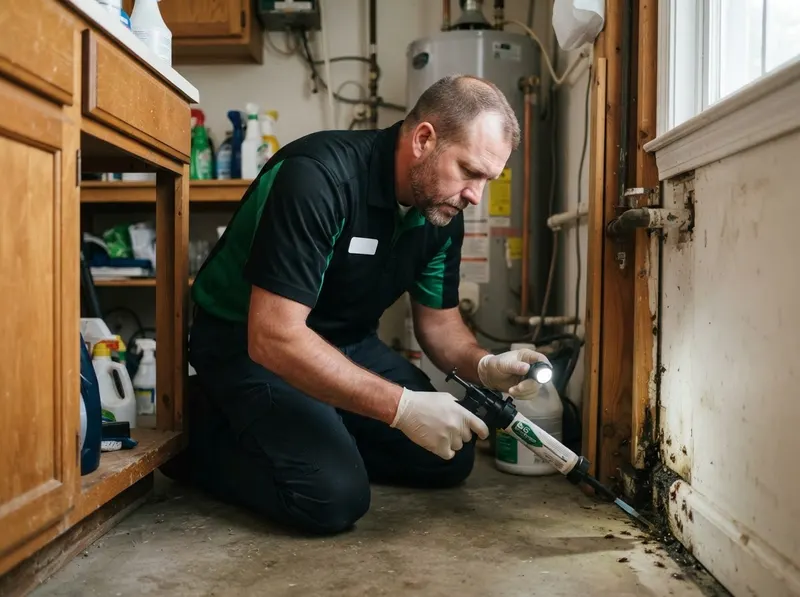
German cockroaches nest inside humid mechanical voids such as refrigerator compressor housings, wall cavities, and plumbing chases, reproducing rapidly once indoor harborages are established. Smokybrown and American cockroaches enter from outdoor pine straw, tree hollows, and municipal storm drains. Defense protocols deploy target-specific insect growth regulators (IGRs) combined with microencapsulated biological baits that disrupt chitin synthesis, stopping nymphs from molting into breeding adults. High-draw vacuums equipped with HEPA filtration remove active aggregations, allergens, and egg capsules directly from structural voids.
Get a quote →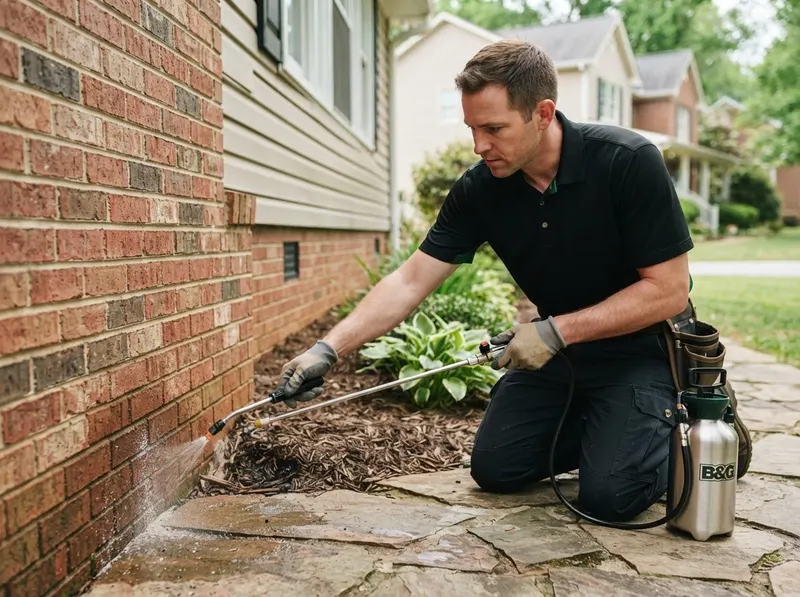
Odorous house ants, Argentine ants, and red imported fire ants compromise structural perimeters and landscape foundations across Piedmont soil profiles. Standard consumer retail spray repellents trigger 'budding,' an involuntary survival mechanism where a single colony fractures into multiple satellite nests within wall cavities. Professional eradication utilizes low-dose non-repellent liquid formulations alongside protein- and carbohydrate-based bait matrices. Worker ants forage the active bait chemistry and transport it into subfloor chambers, neutralizing all egg-producing queens throughout the colony complex.
Get a quote →Asian tiger mosquitoes exploit shade, microclimates, and ambient moisture generated along urban river corridors, dense garden canopies, and poorly drained yard catch basins. Suppression initiatives combine biological larvicides containing Bacillus thuringiensis israelensis (BTI), registered with the US EPA Office of Pesticide Programs , applied directly to standing water zones to neutralize larvae before emergence. Simultaneously, automated mist blowers apply encapsulated micro-suspensions to the undersides of broadleaf foliage, shrub lines, and deck perimeters to suppress adult rest zones without damaging flowering turf.
Get a quote →Bed bugs shelter inside mattress seams, baseboard margins, electrical switch plates, and crown molding recesses, resisting common over-the-counter pyrethroid products through target-site genetic mutations. Eradication systems utilize targeted structural desiccant dusts containing amorphous silica alongside multi-mode-of-action residual applications that compromise the insect's protective waxy cuticle. Treatments target every harborage zone identified during systematic crack-and-crevice diagnostics, stopping active blood feeding and breaking the 21-day egg hatching cycle.
Get a quote →Paper wasps, bald-faced hornets, and yellowjackets establish aggressive aerial paper nests beneath soffits, porch overhangs, deck stringers, and structural wall weep holes. Yellowjacket colonies frequently construct subterranean nests within abandoned rodent burrows throughout residential landscaping, presenting severe sting hazards to occupants and pets. Specialized removal teams utilize directional high-velocity residual dust injectors to neutralize nests instantly at the core, followed by the physical removal of the nest matrix and protective treatment of the substrate to prevent secondary recolonization.
Get a quote →Over 50% of first-floor ambient air originates directly from the crawlspace foundation through natural structural stack effect dynamics. Dirt crawlspaces saturated with Piedmont humidity cultivate structural wood rot fungus, attract subterranean termites, and provide ideal harborages for camel crickets and wood-boring beetles. Encapsulation combines commercial 12-mil to 20-mil reinforced vapor barriers covering 100% of exposed earth, sealed foundation walls, insulated access doors, and dedicated crawlspace dehumidifiers that maintain relative humidity below 55%, adhering to standards set by the International Association of Certified Home Inspectors .
Get a quote →You get a firm, itemized quote for your pest control service before any work begins, no surprises, no pressure.
Careful prep, tidy work, and a full cleanup when we are done. We treat your home and belongings like our own.
The same trusted, background-checked team from the first call to the final check.
Property protection requires aligning intervention protocols with structural risk factors. If a home exhibits localized foraging insects without building penetration, exterior liquid barrier defense provides adequate exterior control. If wood framing or subfloors display mud tubes or hollowed timber, a liquid non-repellent termiticide barrier or interior structural treatment is necessary.
When selecting between standard exterior chemical dusting and mechanical structural exclusion, exterior dusting offers short-term insect population reduction, while mechanical exclusion physically seals foundation gaps, crawlspace penetrations, and rooflines using rigid hardware cloth and elastomeric sealants. The trade-off centers on upfront expenditure versus defensive duration: exterior seasonal spraying carries lower upfront implementation costs but demands recurring quarterly intervention, whereas architectural exclusion requires a higher initial investment but provides a long-lasting physical barrier that stops rodent and wildlife entry without continuous reliance on indoor chemical applications.
Every project gets a firm, written price after a free on-site visit. Ranges below for orientation.
Tell us about your pest control service job and we'll send a clear, written quote, usually the same day. Or just call and talk to a real Greenville pro.
(864) 215-5084
Properties throughout Greenville face acute pest pressures caused by the dense hardwood tree canopies flanking Paris Mountain State Park, moisture corridors radiating from the Reedy River, and historical architectural flaws. Historic crawlspace foundations along Augusta Road and North Main frequently feature open brick foundation piers that invite subterranean moisture and rodent entry. Across mid-century neighborhoods like Gower Estates and Overbrook, settling concrete foundations create hidden sub-slab pathways where subterranean termite swarms initiate unnoticed wood destruction each spring.
Free estimates for Greenville & the surrounding area.
 IronCove Pest Protection